
ICONAN 2027 PLENARY SPEAKERS
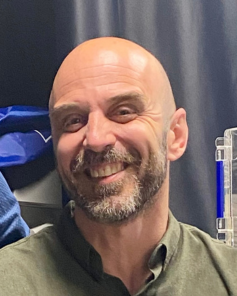
Paolo Bergese
Department of Molecular and Translational Medicine, Università di Brescia, Italy / Center for Colloid and Interface Science - CSGI, Firenze, Italy
Paolo Bergese, after a full marks MSc in Physics and a Ph.D. in Materials Engineering, moved into and grew up as a scientist at the bio-nano frontier, where he realized that colloid and surface chemistry can raise and answer original biological questions. Today he is Full Professor of Chemistry at the University of Brescia and a member of the Italian Center for Colloid and Interface Science (CSGI). In 2010 and 2012, he was Visiting Professor at the Massachusetts Institute of Technology (MIT). Totally fascinated by extracellular (biogenic) nanoparticles, he founded and heads a multidisciplinary team, one of the first examples of integration of chemistry, nanotechnology, and molecular biology in extracellular vesicle research. In parallel, he also established within the Center for Colloid and Surface Science (CSGI) a specialized lab network for advanced physicochemical characterization of extracellular nanoparticles. He has made extensive contributions to biological surface science, focusing in recent years on investigating the relationship between mesoscale properties of extracellular vesicles and their biological behavior and function. He has a strong record of peer-reviewed publications and citations, and has coordinated multiple nationally and internationally funded projects, including the Horizon 2020 FET projects evFOUNDRY – The Extracellular Vesicle Foundry (http://www.evfoundry.eu/) and BOW – Biogenic Organotropic Wetsuits (https://www.bowproject.eu/).
Speech Title: Extracellular vesicle nanomedicines: directions from the physico-chemical landscape
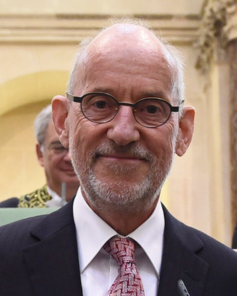
Patrick Couvreur
Paris-Saclay University, Institut Galien (Orsay, France)
Patrick Couvreur is Emeritus Professor at Paris-Saclay University, member of the French Academy of Sciences and of the Institut Universitaire de France (IUF). He held the Chair of Technological Innovation at the Collège de France (2009–2010). He served as Director of the Institut Galien Paris-Saclay from 1998 to 2010 and founded and directed the Doctoral School “Therapeutic Innovation” (1999–2006).
His research focuses on the design of nanomedicines, particularly for the treatment of cancer and central nervous system diseases. He is the author of more than 600 scientific publications. He co-founded three biotechnology start-ups, including BioAlliance Pharma, which developed a nanomedicine that reached Phase III clinical trials for hepatocellular carcinoma.
Originally trained as a pharmacist, he has internationally recognized expertise in pharmacology, toxicology, and biopharmaceutics, which also led him to address biosafety issues.
Throughout his career, Patrick Couvreur has received numerous scientific distinctions in France and internationally, including the Galien Prize, CNRS Innovation Medal, Achille Le Bel Grand Prize of Chemistry, Host Madsen Medal, European Inventor Award, Biomaterialia Golden Medal, Blaise Pascal Medal, and CRS Founder Award. He has played an active role in the governance of several international scientific organizations and holds multiple honorary doctorates.
He is a member of the French National Academies of Medicine and Pharmacy (President of the Academy of Pharmacy in 2020), as well as the French Academy of Technologies. Internationally, he is an elected member of the U.S. National Academy of Medicine and National Academy of Engineering, the Royal Academy of Medicine of Belgium, the Real Academia Nacional de Farmacia (Spain), the Academy of Pharmaceutical Sciences and Technology (Japan), the European Academy of Sciences, and Academia Europaea.
Speech Title: Advanced nanomedicines for the treatment of severe diseases
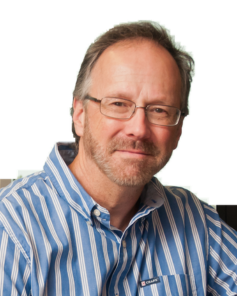
Jon Dobson
J Crayton Pruitt Family Emeritus Professor of Biomedical Engineering, University of Florida, USA / Chief Technology Officer, Blackfish Biotech, Inc., Gainesville, Florida USA
Jon Dobson is Emeritus Professor of Biomedical Engineering and Chief Technology Officer at Blackfish Biotech, Inc. He graduated with a B.Sc. and M.Sc. from the University of Florida and a PhD in Natural Sciences from the Swiss Federal Institute of Technology, ETH-Zurich. He did his postdoctoral training in geomagnetism and biophysics at both the ETH-Zurich and The University of Western Australia, before taking a faculty position at Keele University in the United Kingdom. In 2011, he returned to the University of Florida as Professor of Biomaterials and Biomedical Engineering.
Professor Dobson’s research focuses on biomedical applications of magnetic micro- and nanoparticles, the role of brain iron in neurodegenerative diseases, and biomedical device design. He is a Fellow of the American Association for the Advancement of Science (AAAS), the National Academy of Inventors (NAI), the American Institute for Medical and Biological Engineering (AIMBE), The Royal Society of Biology, The Royal Society of Medicine, and a past Royal Society of London Wolfson Research Merit Fellow. In 2002, he was selected for the Wellcome Trust’s Sir Henry Wellcome Showcase Award, and in 2008 the UK Medical Research Council’s César Milstein Award. He was a 2019 Weldon School of Engineering Distinguished Lecturer at Purdue University, the Page Morton Hunter Distinguished Lecturer at Clemson University in 2012, and recipient of the International Journal of Nanomedicine’s Distinguished Scientist Award in 2017.
Professor Dobson has authored or co-authored more than 200 peer-reviewed publications, which have garnered over 29,000 citations. He is one of the 50 most highly cited researchers in regenerative medicine in the world, and one of the 70 most highly cited in nanomedicine, according to Google Scholar.
Professor Dobson has 38 US and world-wide patents awarded or pending, and is co-founder of four spin-off companies that, between them, have raised over $7 million in grants and private equity funding. His patents have been licensed by companies in the UK and the US, and these technologies are in use in academic institutions and biotechnology companies in more than 25 countries around the world.
Speech Title: Biomedical Applications of Magnetic Nanoparticles
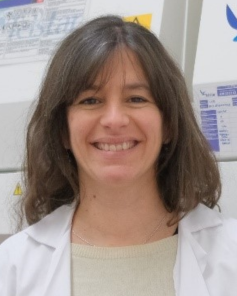
Ana Espinosa
Institute of Materials Science of Madrid (ICMM-CSIC), Spain
Ana Espinosa is a Tenured Scientist at the Institute of Materials Science of Madrid, Spanish National Research Council (ICMM-CSIC). She holds a PhD in Materials Physics from the Universidad Autónoma de Madrid. After postdoctoral positions at ICMM-CSIC, Université Paris Diderot/CNRS and IMDEA Nanociencia, she established an independent research line focused on functional nanomaterials for biomedical applications.
Her research explores the design of magnetic and plasmonic nanomaterials for advanced thermal nanotherapies, with particular emphasis on cancer treatment, multimodal activation strategies and quantitative nanoscale thermometry using X-ray absorption-based approaches. Her work aims to understand how nanomaterial structure, biological environment and therapeutic response are interconnected in complex cellular and tumour models.
She has led several competitive national and international projects, including projects funded through the Spanish Research Agency, Comunidad de Madrid, CSIC, AECC and ERA-NET TRANSCAN-3. She has extensive experience in large-scale facilities and synchrotron-based techniques, including ESRF, SOLEIL and ALBA.
Speech Title: Coming soon
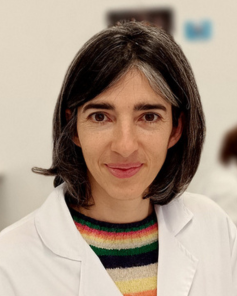
Lucía Gutiérrez
Senior Researcher at Instituto de Nanociencia y Materiales de Aragón (INMA), Spain
Lucía Gutiérrez is a Scientist at the Instituto de Nanociencia y Materiales de Aragón (INMA), a joint research centre of the Spanish National Research Council (CSIC) and the University of Zaragoza (UNIZAR). She got a PhD at UNIZAR and has developed her scientific career across multiple international institutions, including postdoctoral stays at Queen Mary University of London, the Institute of Materials Science of Madrid (ICMM-CSIC), and the University of Western Australia. She is also co-founder of the Spanish Nanomedicine Society (SENM) and coordinator of the Nanomedicine Connexion from CSIC.
Her research focuses on magnetic nanoparticles for biomedical applications, particularly their synthesis, characterization, and interactions with biological systems. She has co- authored over 100 publications in topics such as magnetic hyperthermia, biodistribution and degradation of nanomaterials, quantification and detection of nanoparticles in complex media, and the influence of surface chemistry on particle behaviour. Her scientific contributions have yielded important results in understanding how magnetic iron oxide nanoparticles behave in vivo and in vitro, insights that are crucial for advancing therapies like cancer hyperthermia and diagnostic imaging.
Speech Title: From Random to Aligned: Intracellular Vesicle Alignment in Magnetic Hyperthermia
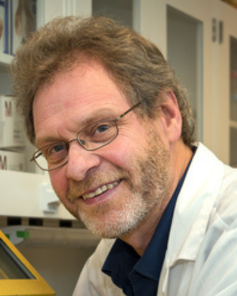
Urs Häfeli
University of British Columbia (UBC), Faculty of Pharmaceutical Sciences, Canada
Dr. Urs Häfeli studied Pharmacy at the Federal Institute of Technology (ETH Zurich, Switzerland) and received a Ph.D. at the Paul Scherrer Institute (ETHZ) in radiopharmaceuticals. After working as a scientist for 11 years in radiation oncology at the Cleveland Clinic, he has been a professor in the Faculty of Pharmaceutical Sciences at UBC since 2004. For 5 years (from 2016-2020), he worked half-time as a Joint Professor in Nanomedicines at the Pharmacy Department of the University of Copenhagen in Denmark. Research in the Häfeli Laboratory is primarily directed at fighting cancer with radioactive pharmaceuticals and the development of diagnostic radiopharmaceuticals to be used in different nuclear medicine procedures. He also enjoys exploiting nanotechnology and microtechnology for different drug delivery applications, including the development of painless microneedles and the use of microfluidics for the preparation of monosized microspheres. He is especially interested in the use of magnetic drug targeting, an area where Dr. Häfeli has been organizing the International Conference on the Scientific and Clinical Applications of Magnetic Carriers since 1996 every 2 years. The next meeting will take place in Cadiz, Spain from May 23-26, 2028. Another major area of the lab’s research is the development of polymer-drug conjugates (macromolecular prodrugs). This research will be presented at this conference.
Speech Title: Targeting Rheumatoid Arthritis with a Macromolecular Prodrug Nanomedicine
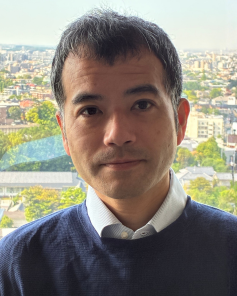
Akira Ito
Nagoya University, Japan
Akira Ito is a Professor at Nagoya University, Japan. His research focuses on nanomedicine and the biomedical applications of magnetic nanoparticles, particularly in developing innovative approaches for cancer therapy (magnetic hyperthermia) and regenerative medicine (magnetic force-based tissue engineering). He received his Ph.D. from Nagoya University in 2001. He has authored more than 100 peer-reviewed scientific publications and has an H-index of 47 (Scopus). He is an Associate Member of the Science Council of Japan and serves as Editor-in-Chief of the Journal of Bioscience and Bioengineering (Elsevier). His work has contributed to the advancement of nanotechnology-based approaches in biomedical engineering and their translation into practical applications.
Speech Title: Coming soon
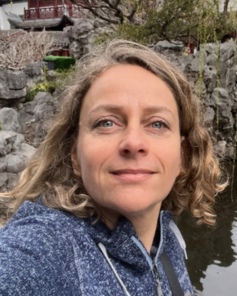
Jelena Kolosnjaj-Tabi
Institute of Pharmacology and Structural Biology (IPBS, Toulouse), France
Jelena Kolosnjaj-Tabi is a senior CNRS researcher at IPBS since October 2022. She is working at the interface of nanotechnology, biophysics, and biomedical engineering. Her research focuses on harnessing physical stimuli—such as pulsed electric fields and magnetic actuation—to modulate biological responses and thus enhance therapeutic strategies in cancer and infectious diseases. Her main research interests include the fundamental mechanisms of electroporation and the development of nanoparticle-based approaches to interact with and remodel complex biological microenvironments, including tumor extracellular matrices and bacterial biofilms, with the goal of overcoming resistance to conventional treatments. She also investigates the biological effects of electromagnetic radiation, particularly to evaluate the safety of radiofrequency electromagnetic fields on living cells. Her studies are carried out using experimental models of increasing complexity, ranging from single cells to reconstructed three-dimensional tissues and tumor systems.
Speech Title: Magneto-responsive swarms: A dynamic and obedient fleet that disrupts bacterial biofilms
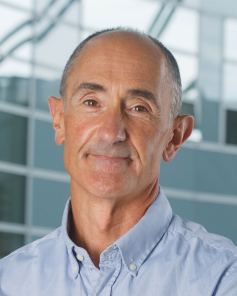
Prof. Luis Liz-Marzán
CIC biomaGUNE (BRTA), Spain
Luis Liz-Marzán is an Ikerbasque Professor at CIC biomaGUNE (BRTA), in San Sebastián (Spain), where he also served as Scientific Director from 2013 to 2021. Luis graduated in chemistry from the University of Santiago de Compostela, completed a postdoc at Utrecht University and Professor at the University of Vigo (1995–2012), where he currently holds a part-time Professor position. He is also a Group Leader of the Biomedical Networking Research Center on Bioengineering, Biomaterials and Nanomedicine (CIBER-BBN). Luis has been visiting professor at various research institutions worldwide and received several scientific awards and honors. Liz-Marzán has made extensive contributions to the colloidal synthesis and self-assembly of metal nanocrystals, as well as the characterization and application of their plasmonic properties. More recently, his research has broadened into the biomedical applications of plasmonic nanostructures.
Speech Title: Coming soon
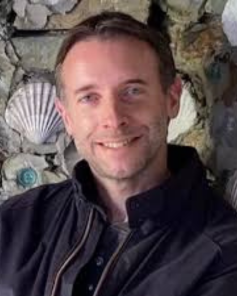
Neil Telling
School of Life Sciences, Keele University, UK
Having previously worked in areas of materials physics and nanoscience for technology applications, Neil’s research now focuses on understanding magnetic nanomaterials in biology and medicine. There are two main aspects to his work: the development and application of magnetic nanoparticles for potential applications in nanomedicine; and the exploration of nanoscale magnetic material in biological, for example, linked to the origin and progression of neurodegenerative diseases such as Alzheimer’s. Neil has worked at a variety of research institutes and university departments during his career, including an in-house position at the Synchrotron Radiation Facility at Daresbury Laboratory in the UK, where he developed expertise in applying x-ray nanoscience to a wide range of science challenges across Physical and Life Sciences. He is currently Professor of Biomedical NanoPhysics at Keele University in the UK, where he has developed in-house a suite of advanced techniques for probing the properties of materials that are relevant to biomedical applications, including a magneto-optical multifunctional microscope that enables magnetic and other nanoparticle properties to be measured in-situ in biological samples. This unique facility enables the assessment of important magnetic properties, such as magnetisation dynamics, to be evaluated within the biological environment in which nanoparticles will be used. Combined with his work on x-ray nanoscience, these facilities are also enabling him to correlate the properties of magnetic deposits found in biological tissue with the complex biochemistry that occurs, for example, in the brain.
Speech Title: Coming soon