
Committee
CHAIRMEN
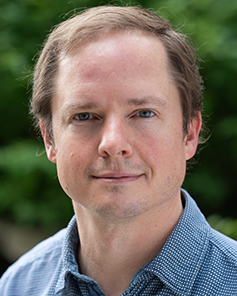
Prof. Frank Vollmer
University of Exeter, UK
Frank Vollmer is Professor in Biophysics at the University of Exeter, UK. He obtained his Ph.D. in ‘Physics & Biology’ from the Rockefeller University in NYC, USA, in 2004. He was Rowland Fellow at Harvard University from 2004 to 2009, Scholar-in-Residence at the Wyss Institute at Harvard in 2010, Group Leader (untenured Associate Professor) at the Max Planck Institute for the Science of Light in Germany from 2011–2016 and Instructor in Medicine at Brigham and Women’s Hospital/Harvard Medical School where he directed a satellite laboratory from 2011– 2016. Since 2016 he is Professor in Biophysics at the School of Physics, University of Exeter, UK. He received the Royal Society Wolfson Research Merit Award in 2017 and in 2021 the Rosalind Franklin Medal and Prize from the Institute of Physics (IoP). Since 2021 he is Fellow of the IoP.

Prof. Peter Zijlstra
Eindhoven University of Technology, The Netherlands
Peter Zijlstra is Professor of Molecular Plasmonics at the Eindhoven University of Technology (TU/e), The Netherlands. He obtained his Ph.D. in photonics from Swinburne University of Technology (Melbourne, Australia) in 2009, after completing his MSc in Applied Physics at the University of Twente (Enschede, The Netherlands) in 2005.
He was Postdoctoral Researcher at Leiden University in the group of Prof. Michel Orrit in 2009 and subsequently held a Veni Fellowship at Leiden University from 2010 to 2012. In 2012 he joined the Eindhoven University of Technology as Assistant Professor, where he was tenured in 2015 and appointed as full professor in 2025.
His research focuses on developing single-molecule sensing approaches using plasmonic, nanophotonic, and fluorescence-based techniques to study biomolecular interactions in complex environments. His group combines nanophotonics, super-resolution microscopy, and electromagnetic modelling to push the limits of sensitivity and resolution in optical biosensing. He has received an ERC Consolidator and NWO Vici grant for his work on optical single-molecule sensing technologies.
LOCAL SCIENTIFIC COMMITTEE
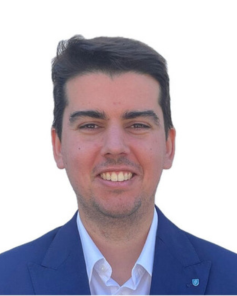
Dr. Ricardo A. Marques Lameirinhas
Instituto de Telecomunicações, Portugal
Ricardo A. Marques Lameirinhas obtained his PhD in Electrical and Computer Engineering from Instituto Superior Técnico – Universidade de Lisboa in 2024. He is a Researcher in the Applied Electromagnetics Group, Instituto de Telecomunicações. His research interests include optoelectronic devices, plasmonics, photonics and semiconductors. Focusing on these areas, he conducts both fundamental and applied research, combining the development of novel analytical and numerical tools with experimental work for the design, optimisation and development of optoelectronic systems, with a particular emphasis on light–matter interactions in nanostructured and semiconductor-based devices.
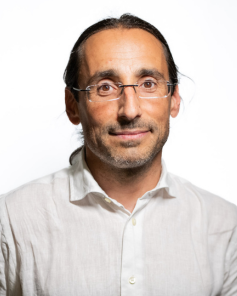
Prof. Pedro Paulo
Universidade de Lisboa, Portugal
Pedro Paulo is Assistant Professor in Physical-Chemistry, Materials and Nanosciences at Técnico engineering school (ULisboa, Portugal). He obtained his PhD in Chemistry in 2005 (ULisboa, Portugal) in the topic of supramolecular photochemistry and electron transfer. Afterwards, he pursued post-doctoral studies and spent one year in the lab of Michel Orrit (Leiden University, The Netherlands). In 2009, he became Assistant Researcher at Centro de Química Estrutural (Técnico, ULisboa), where he develops a research line in photoactive nanomaterials for surface-enhanced spectroscopy. His research is focused on fluorescence-based optical sensors with enhanced signaling by nanoplasmonic antennas, such as gold nanodimers that deliver unprecedented enhancements of fluorescence emission from weak emitters. Currently, he seeks to explore single-molecule detection of biomarkers for applications in molecular diagnostics.
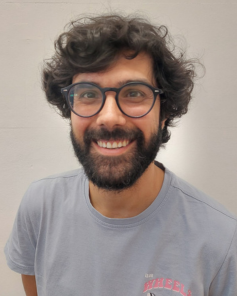
Rui Oliveira-Silva
Instituto Superior Técnico, Portugal
Rui Oliveira-Silva holds a Ph.D. in Biotechnology and Biosciences from Instituto Superior Técnico. Throughout his career, Rui’s research has been directed towards exploring the potential nanobiotechnology by using nanomaterials to develop (Bio)sensors for biomedical applications. Aiming to gain understanding about the “big picture”, he always pursued to explore different materials and be involved in the developments across the entire “architecture” involving a (bio)sensor – from synthesis to functionalization and application in biological samples. and read-out systems. After his Ph.D., Rui is complementing his knowledge base and skill while contributing to infrastructure developments by assembling advanced equipments, namely a Magnetic Particle Spectrometer (MPS), a High Frequency Ultrasound (HIFU) and hacking lab instruments and microscopes using additive manufacturing and low-cost readily available components.
SCIENTIFIC COMMITTEE
The S3IC 2027 Scientific Committee will be composed of experienced Professors and Doctors who are in charge of assessing the submitted papers based on the peer review method.